The Art of Hand Tailoring
24 October 2024|1 min read
Why floating horsehair canvas remains vastly superior to modern fused interfacing, and how it transforms with heat and body movement.
Every jacket has a hidden architecture. Beneath the cloth sits the layer that decides how the garment will hang, move and age. In most ready-made clothing that layer is glued in place. In a hand-tailored jacket it floats.
Canvas, not glue
A fused jacket bonds its interlining to the cloth with heat-activated adhesive. It is quick to make and looks crisp on the rail, but the bond stiffens the cloth and, over years of wear and pressing, can begin to separate.
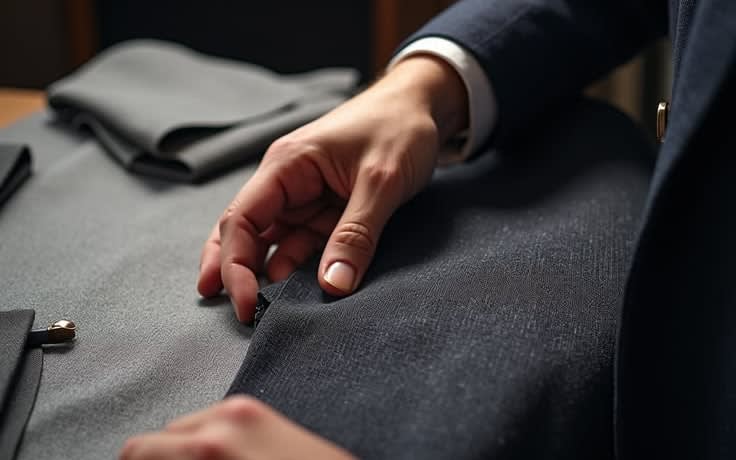
A floating canvas is cut from wool and horsehair and attached by hand with thousands of small stitches. Nothing is glued. The cloth and the canvas move together, so the chest keeps its shape while the jacket stays soft and alive.
- A natural roll to the lapel that never presses flat
- A chest that keeps its shape through years of wear
- Cloth that breathes, because nothing seals it
A jacket that learns you
With warmth and movement, the canvas slowly settles to the way you stand and walk. After a season of wear it no longer feels like a new garment. It feels like yours.
The canvas is the part no one sees, and the part everyone notices.
This is why every commission at The Bespoke House is built around a hand-padded canvas. It takes longer, and it is meant to: the hours spent on the inside are the reason the outside lasts.